

On this page
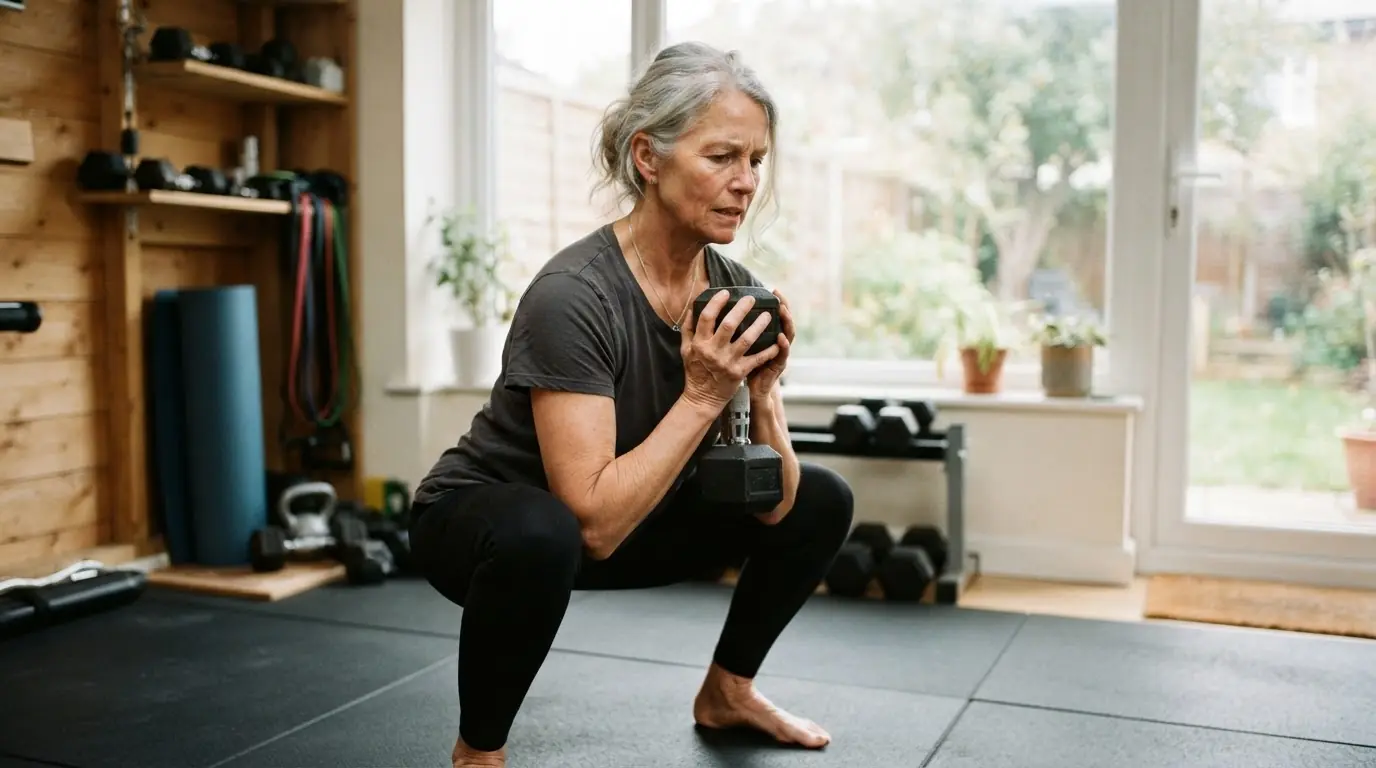
In short, the answer is yes: a meta-analysis of 49 studies involving adults over the age of 50 showed an average increase of about 1.1 kg of lean mass following approximately 20 weeks of resistance training. Older women gain muscle at a rate that is similar to or even greater than that of older men, relative to their initial levels. The change that occurs after 50 is not the fact that you are able to build muscle; it is the fact that you have to be more deliberate about doing so.
What's actually happening to your muscle after 50
The shift into menopause represents a genuine change in body composition. The Study of Women's Health Across the Nation (SWAN) monitored the women through menopause using DEXA scans and found that at the beginning of the transition the rate at which fat increased doubled and there was a decrease in lean mass, these changes lasting until about two years after the last period (Greendale et al., JCI Insight 2019).
The trick is that the total weight didn't increase; the fat amount rose while the lean mass decreased, so the scale didn't give a complete picture.
Why the Scale May Not Tell the Whole Story After 50You're not imagining it if you now feel softer or weaker than you did when you were 45, and the situation isn't a lifetime sentence.
The evidence that muscle still responds
Adults who are over 50 can gain muscle through training. Peterson and his colleagues combined data from 49 studies that involved 1,328 adults aged 50 and above. The average increase in lean body mass was 1.1 kg; the more total work carried out in the programmes the greater the gains, and the oldest of the participants gained a little less, which is a good reason for beginning now rather than waiting until 70 (Peterson et al., 2011).
Women perform just as well as men. A meta-analysis published in 2021 of 30 studies looked at 759 women and 651 men aged between 50 and 90 who carried out the same exercise programmes. Although the men gained a greater amount of weight in kilograms, this was mainly due to them having started with more muscle. When compared to their initial levels, however, the women's rate of adaptation was similar to or even greater than that of the men (Jones et al., 2021; UNSW summary). The authors also proposed that older women might gain from having a higher weekly volume, that is, more total repetitions, in order to develop their lower-body strength.
People who are in their 90s do respond. In a small but well-known study published in JAMA in 1990, ten frail residents of a nursing home, whose average age was 90, carried out eight weeks of high-intensity leg exercises. Of the nine who completed the programme, their strength increased on average by 174%, their mid-thigh muscle area grew by 9%, and their tandem walking speed rose by 48% (Fiatarone et al., 1990).
Strength vs. muscle size gains in the 1990 nursing-home study
If you look at the gap in that study between strength (174%) and muscle size (9%), you'll see that strength comes about first and most quickly, while noticeable muscle development follows more slowly. This has an impact on the way you assess your own progress.
Why it takes more effort than it did at 30
Building muscle after the age of 50 is more demanding due to three factors, though it is not made impossible by any of them.
- 1Hormonal changes—according to the SWAN data lean mass decreases during the menopause transition, which means part of your training should just be keeping it steady.
- 2Muscle requires a more intense signal; although light and easy movements are good for keeping you healthy, they do not ask your muscles to grow, for it is necessary to have a load that really feels difficult.
- 3Protein is more important; older muscle requires more protein at each meal if it is to respond properly to training.
What it takes
- The weights should be ones that seem difficult. After completing each set you should still feel as though you could carry out two or three more good repetitions, not ten. The NSCA's position statement concerning older adults gradually recommends 70 to 85% of your one-rep maximum (Fragala et al., 2019).
- The total amount of work is sufficient. In the Peterson study, programs involving higher volumes resulted in more lean mass; for most women, a reasonable target is two or three sets per exercise rather than one.
- Protein should be included at each meal, not just at dinner.
- Not weeks, but months. The average study in Peterson's analysis took approximately 20 weeks. Evaluate your results over a season rather than over a fortnight.
How I'd apply this: a 58-year-old who travels and doesn't want fitness to be her job
She is 58, has only just started lifting weights, goes away every few weeks, and has no intention of living at the gym. That is basically what I would say to her about gaining muscle: set realistic expectations; during the first eight weeks she will be developing her strength and skills and will be able to see this in her logbook before looking in the mirror. Changes in shape typically appear somewhere between months three and six, so I would tell her this on day one so that week four doesn't seem like a failure.
Take the volume from two sessions rather than five. With six movements, two or three sets each, performed twice a week she will get between 24 and 36 hard sets per week. This amount is sufficient for growth and can be fitted into 60 to 90 minutes of training each week.
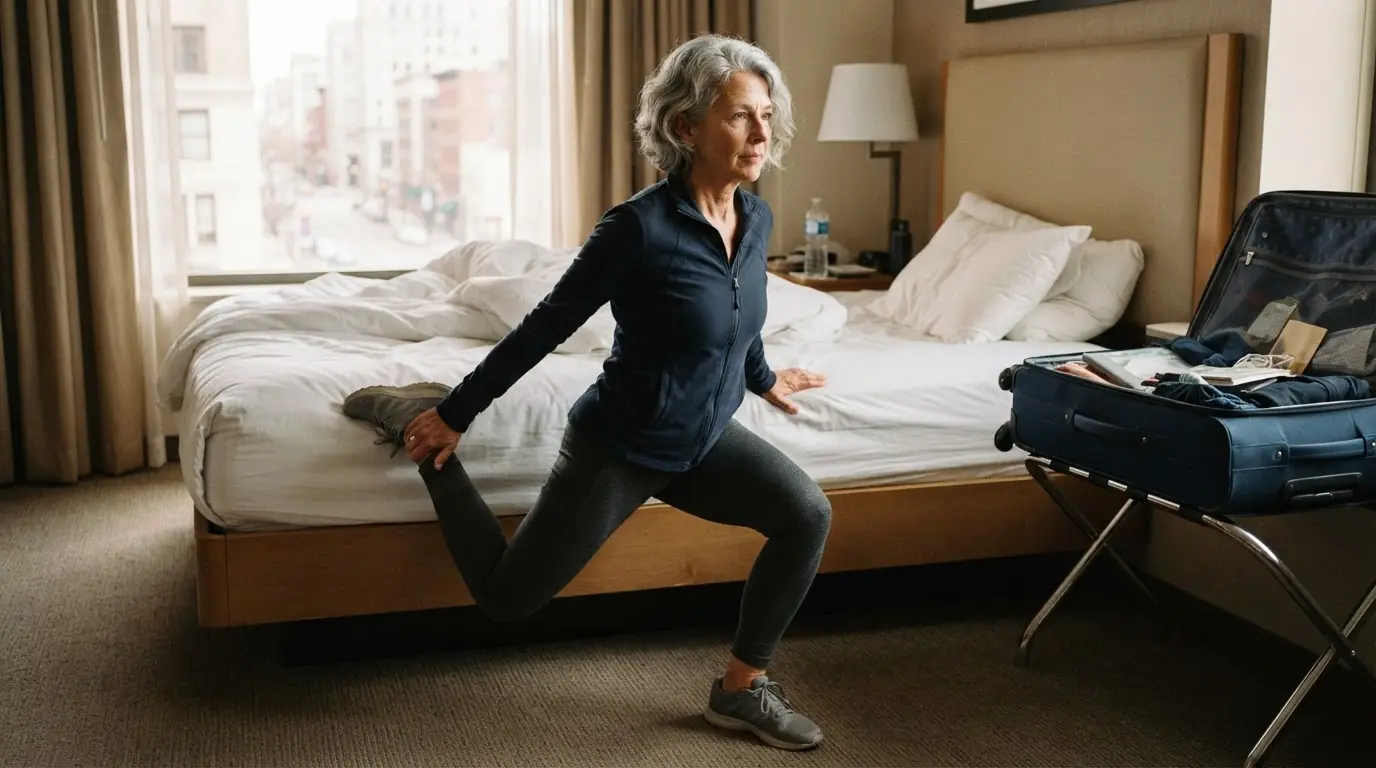
It's important to protect her legs during the travel weeks. Although bands are good for the upper body, they limit the amount of load she can carry through her legs. While on the road I would switch her to exercises involving one leg, for example split squats and step-ups using the bed frame of the hotel, and carry out the lowering part of the movement at a speed of three seconds. Like this, a high level of stimulation can be achieved without using a single dumbbell.
Keep an eye on three things, not on the scale: the weight or the bar used on her primary exercises, the number of sit-to-stands she can do in 30 seconds, and how well her trousers fit. She is building muscle if any of these three are changing, no matter what the scale indicates.
Attach a source of protein to the meals that she already has. Since travelling makes meals unpredictable, I'd recommend having a protein source for breakfast, which is the meal that she has the most control over. The article on protein explains what this looks like.
Frequently asked questions
Can women still build muscle after menopause?
How long does it take for a woman who is over 50 to build up muscle?
How much muscle can a woman who is over 50 years of age gain?
Has it gone too far to begin building muscle at the age of 70?
Why am I lifting but not gaining muscle?
Sources
- 1Fiatarone MA et al. High-intensity strength training in nonagenarians: effects on skeletal muscle. JAMA. 1990;263(22):3029–3034. PubMed
- 2Fragala MS et al., 'Resistance training for older adults: position statement from the National Strength and Conditioning Association', Journal of Strength and Conditioning Research, 2019;33(8):2019–2052. Journal
- 3Greendale GA et al., 'Changes in body composition and weight during the menopause transition', JCI Insight, 2019;4(5):e124865. JCI Insight
- 4Jones MD et al. Sex differences in adaptations in muscle strength and size following resistance training in older adults: a systematic review and meta-analysis. Sports Med. 2021;51(3):503–517. DOI
- 5Peterson MD, Sen A, Gordon PM. Influence of resistance exercise on lean body mass in aging adults: a meta-analysis. Med Sci Sports Exerc. 2011;43(2):249–258. PubMed
- 6University of New South Wales. Not just a guys' club: resistance training benefits older women just as much as older men. ScienceDaily, 7 January 2021. ScienceDaily